



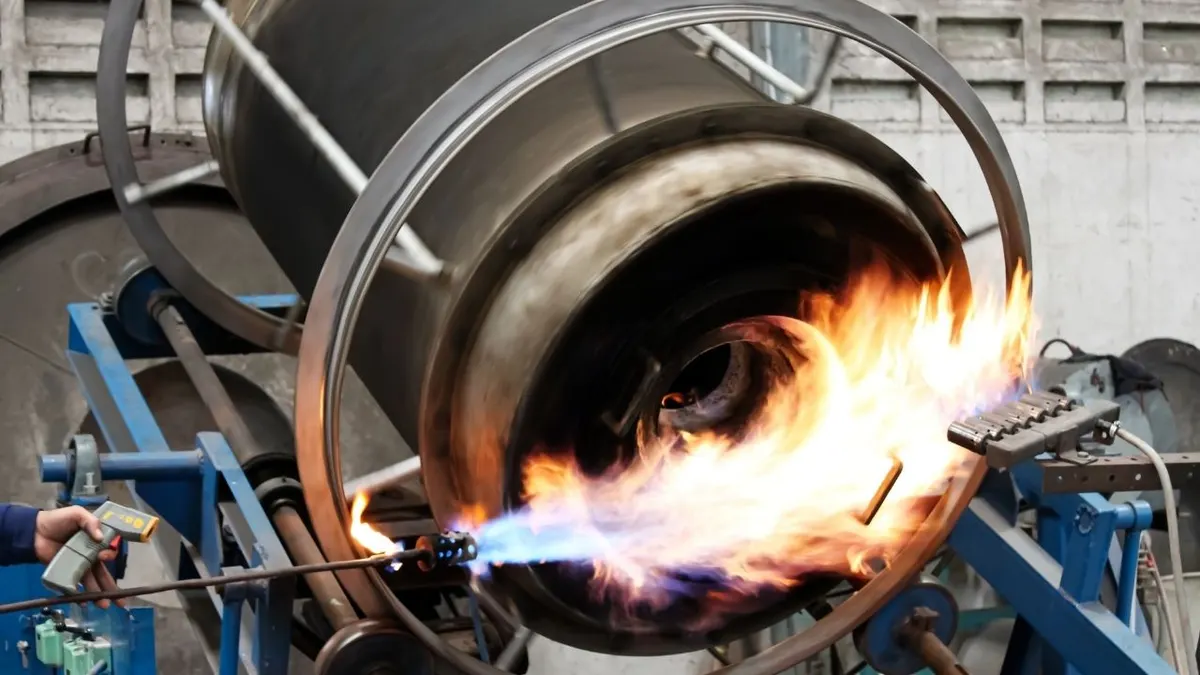
Rotational molding is a plastics processing method used to manufacture hollow products, such as toy parts, or large products, including agricultural machinery tanks, water tanks and others.
In 2022, the latest available figure, the process accounted for around 2% of all plastic products manufactured in Brazil.
In this article, you will learn about some of the characteristics and distinctive features of molds used in rotational molding.
First, let us review how the process works.
Rotational molding begins by placing ground polymer inside the mold, which is then sealed. The mold then rotates around two axes, horizontal and vertical, inside an oven so that the material melts and spreads evenly throughout its interior.
In the third stage, the mold is cooled until the part solidifies. Finally, the mold is opened and the finished part is removed.
In addition to producing more uniform part surfaces, lower residual stresses and products with complex designs, rotational molding is considered a more affordable process: the equipment can cost as little as one-fifth as much as an injection or blow molding machine, and its mold can cost one-third to one-quarter as much.
With information from Mundo do Plástico.